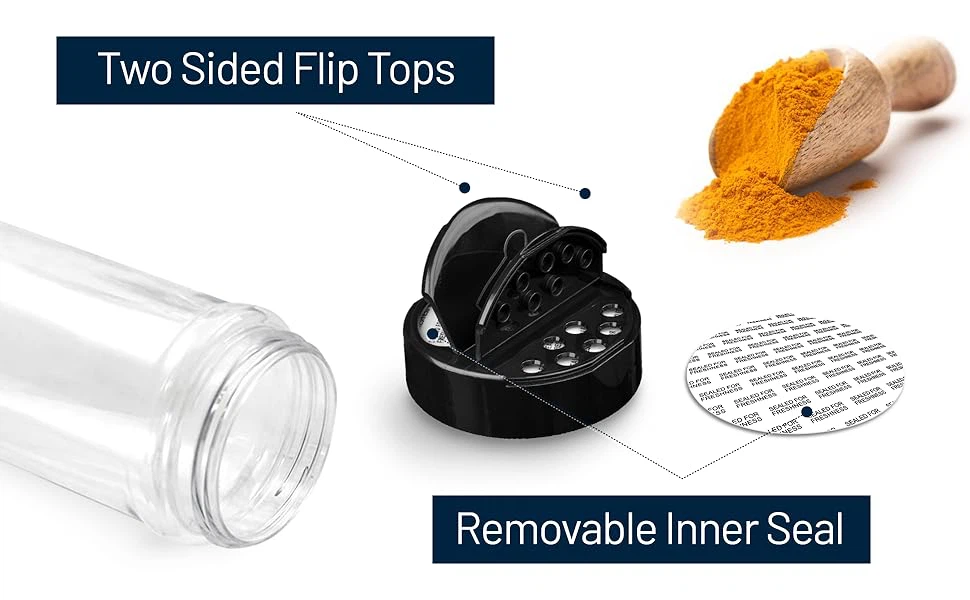

With the tightening of global environmental regulations and the awakening of consumers' green awareness, the packaging industry is ushering in a "lightweight revolution". Recently, international food giant Unilever announced that it will replace 50% of seasoning packaging in Asia with plastic butterfly lids by 2025, with an expected reduction of 300 tons of plastic usage per year. This measure has brought this classic bottle cap design back into the public eye and sparked a deep discussion in the industry about "small design, big environmental protection".
1, Policy Dongfeng: Alternative solutions under the global plastic ban
In June 2024, the latest EU Packaging and Packaging Waste Regulation (PPWR) officially came into effect, requiring all packaging to be "reusable and recyclable". The plastic butterfly cover, with its single material (PP/HDPE) characteristics, has become a compliant choice for easy recycling.
Compared to traditional metal caps, butterfly caps do not require separation of metal and plastic components, simplifying the recycling process by 30%
--Maria Chen, spokesperson for the international environmental organization "Green Packaging Alliance"
2, Design Advantage: Why are brands betting?
1) Plastic reduction effectiveness
The average weight of butterfly covers is only 5-8 grams, which is 60% lighter than metal covers. Taking a certain spicy sauce brand as an example, after switching to butterfly caps, the plastic content of a single bottle was reduced by 4.2 grams, saving over 800000 yuan in raw material costs annually.
2) User experience upgrade
One handed opening and closing: The design of the wings on both sides is suitable for scenarios such as food delivery and car transportation. According to a survey conducted by a certain milk tea brand, consumer satisfaction with the "easy to open lid" has increased by 27%.
Leak proof certification: The 2024 Japan Packaging Association test showed that butterfly caps with silicone pads have better leak proof performance than regular screw caps.
3) Cost friendly
According to data from the China Plastics Association, the production cost of butterfly cap injection molding is 40% lower than that of metal caps, and it is more suitable for high-speed filling lines.
3, Industry dynamics: Innovative applications emerge endlessly
McDonald's: Upgraded tomato sauce packets to reusable butterfly lid small boxes in some European stores to reduce waste.
Pharmaceutical company transformation: Pfizer plans to replace some drug bottle caps with butterfly caps and child safety locks, balancing safety and convenience.
National breakthrough: A company in Zhejiang has developed a biodegradable PLA butterfly cover and has received a trial order from Coca Cola's supply chain.
4, Expert opinions
The explosion of butterfly caps is a victory for the concept of 'moderate packaging'. In the next three years, its penetration rate in the food and daily chemical fields may increase from the current 15% to 35%.
--Li Ming, Secretary General of China Packaging Federation
Journalists Observation
From seasoning bottles to medicine cans, this' little butterfly 'is stirring up a green storm in the packaging industry. But the challenge still exists: how to balance sealing and ease of opening? How to increase the proportion of recycled materials? These will be the next key areas for the industry to tackle.