

OEM Coffee Grinder Manufacturer
Sinogrinder is an OEM coffee grinder manufacturer producing manual and electric coffee grinders for coffee brands, kitchenware distributors, importers, retailers and promotional product companies.
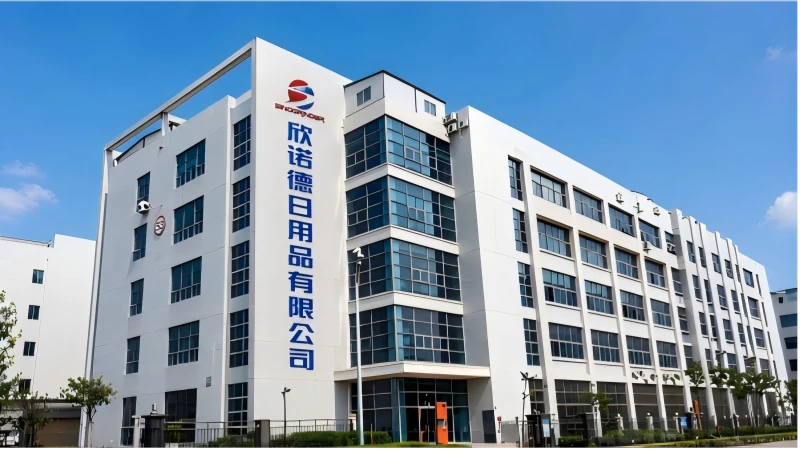
Since 1999, we have manufactured grinding and seasoning products in our Xiamen factory. For coffee grinder projects, our work covers product selection, structural evaluation, color matching, logo application, packaging development, sample testing, assembly, inspection and bulk production.
A coffee grinder project cannot be evaluated by appearance alone. Burr alignment, grind adjustment, shaft stability, operating resistance and cleaning convenience all affect the user experience. For electric models, motor performance, vibration, operating noise and heat also need to be checked before production.
Our job is to turn these requirements into a product that can be manufactured consistently and supplied in commercial quantities.
We support coffee grinder projects for different sales channels and price levels, including:
- Manual coffee grinders for coffee accessory brands
- Portable grinders for travel and outdoor use
- Compact grinders for home and office use
- Electric coffee grinders for kitchenware retailers
- Private label coffee grinders for e-commerce sellers
- Coffee grinder gift sets for promotional and corporate gift companies
- Custom grinders for supermarket and department store programs
Our standard range includes ceramic burr hand grinders, glass-container grinders, stainless steel travel grinders and compact electric coffee grinders.
Existing products are suitable for projects that require a shorter development schedule. If an existing model cannot meet the required appearance, capacity or structure, we can evaluate modifications or new mold development separately.


Before recommending a model, we need to understand how the grinder will be used and where it will be sold.
The following information affects the product structure and quotation:
- Manual or electric operation
- Target retail price
- Main brewing method
- Required grind range
- Coffee bean capacity per use
- Home, office, travel or gift application
- Preferred body material
- Logo position and printing method
- Individual box or gift packaging
- Target market and compliance requirements
- Estimated order quantity
- Expected delivery schedule
For example, a travel grinder requires compact dimensions, secure component assembly and packaging that protects the handle during transport. A grinder for home use may place more emphasis on capacity, operating comfort and appearance. An electric grinder requires additional evaluation of the motor, power configuration, operating noise and product safety requirements.
Clarifying these points at the beginning reduces unnecessary sample revisions.
Manual and Electric Coffee Grinder Options
| Item | Manual Coffee Grinder | Electric Coffee Grinder |
| Operation | Hand-crank mechanism | Motor-driven grinding |
| Main advantages | Portable, simple structure and no external power required | Faster operation and convenient daily use |
| Typical applications | Travel, outdoor use, pour-over accessories and gift sets | Home, office and kitchen appliance ranges |
| Main production controls | Burr alignment, shaft stability, handle connection and grinding resistance | Motor mounting, speed stability, vibration, noise and heat |
| Common customization | Body color, handle, logo, container and packaging | Housing color, logo, packaging and model-specific power configuration |
| Sample evaluation | Grinding feel, adjustment range and particle consistency | Grinding result, operating time, noise, vibration and temperature |
The choice should be based on the intended user and retail channel. A higher-priced product is not automatically the right solution. The grinder needs to match the buyer's price range, packaging format and performance expectations.

The structure of a manual grinder looks straightforward, but several parts need to work together accurately.
The crank handle transfers force through the shaft to the burr. If the shaft is unstable or the burr is not properly positioned, the grinding resistance may vary during rotation. This can also affect the repeatability of the selected grind setting.
During development and production, we pay attention to:
- Burr position and alignment
- Shaft stability
- Handle connection
- Rotation resistance
- Adjustment mechanism
- Bean hopper fit
- Ground coffee container connection
- Ease of disassembly and cleaning
- Surface condition of visible parts
For portable models, we also check whether the handle and removable parts can be packed securely without increasing the carton size unnecessarily.
Electric Coffee Grinder Manufacturing
An electric grinder needs to provide stable operation under load. The motor, burr assembly and housing must be positioned correctly to limit unnecessary vibration and friction.
Depending on the model, our production checks may include:
- Motor installation and alignment
- No-load and loaded operation
- Grinding speed stability
- Operating noise
- Housing vibration
- Abnormal friction
- Temperature during operation
- Switch response
- Component assembly
- Charging or power function, where applicable
- Finished-product appearance
Electrical specifications and compliance requirements vary by model and destination market. These requirements should be confirmed before sampling so that the correct product configuration can be evaluated.


The burr system is one of the first points we evaluate in a coffee grinder project.
Our current standard coffee grinder range mainly uses ceramic burr systems. Ceramic burrs are suitable for many manual and compact grinder designs because they are corrosion-resistant and can be integrated into practical consumer products.If a project requires a different burr material or a specific grinding structure, we review the request according to the target grind range, product dimensions, expected order quantity and development budget.
The burr material is only one part of the grinding system. Grind performance also depends on:
- Burr geometry
- Burr alignment
- Shaft support
- Adjustment structure
- Distance between burrs
- Stability under load
- Coffee bean type
- Amount of coffee used for each test
For this reason, we recommend testing samples with the buyer's usual coffee beans. The sample should be checked at several adjustment positions rather than at only one setting.If the product is expected to support a particular brewing method, such as pour-over, French press or espresso-compatible grinding, that requirement must be stated before development. We do not assume that one existing grinder is suitable for every brewing method.
Coffee Grinder Customization Options
We provide OEM and private label customization according to the selected model and order quantity.
Product Color
Plastic housings and components can be produced in customized colors. Buyers can provide a Pantone reference or a physical color sample.
The final appearance may be affected by the resin, surface texture and component thickness. We therefore confirm the color on an actual sample before bulk production.
Logo Application
Depending on the product material and logo position, available methods may include:
- Pad printing
- Screen printing
- Laser marking
- Label application
- Customized molded branding
We review the logo artwork before recommending a suitable process. Very fine lines, small letters and multicolor graphics may require adjustment for stable production.
Materials and Surface Finish
Our coffee grinders may use combinations of ABS, stainless steel, glass, acrylic, ceramic and other model-specific materials.
Surface colors and decorative parts can be adjusted within the limits of the existing construction. Major structural or material changes require a separate feasibility review.
Packaging Development
We can prepare packaging for retail, e-commerce, gift and distribution programs, including:
- White box
- Printed color box
- Kraft box
- Gift box
- Instruction manual
- Product label
- Barcode label
- Inner tray
- Protective insert
- Master carton
- Private label packaging
Packaging development is based on the product dimensions, sales channel and transport requirements. Glass containers, extended handles and removable components require additional protection to prevent movement inside the box.
Sample Testing Before Mass Production
A coffee grinder sample should be tested as a working product, not only approved by its color and logo.
We recommend that buyers evaluate the sample using the coffee beans and brewing methods relevant to their market.
| Sample Check | What Should Be Evaluated |
| Grind adjustment | Quick opening with controlled dispensing |
| Grinding result | Distributes seasoning through multiple holes |
| Operating feel | Offers direct pouring and controlled shaking |
| Burr and shaft | Provides a simple closed container |
| Capacity | Grinds spices directly from the bottle |
| Cleaning | Supports storage and freshness protection |
| Assembly | Fit between the hopper, body, handle and collection container |
| Appearance | Color, surface finish, logo position and visible marks |
| Packaging | Product protection, presentation and carton fit |
For electric models, the buyer should also evaluate noise, vibration, operating time and temperature under actual grinding conditions.
Comments from sample testing should be specific. Instead of stating that the grind is "not correct," it is more useful to identify the adjustment position, coffee bean type, quantity and expected result. This helps our engineering and production teams locate the issue more efficiently.
Our OEM Coffee Grinder Development Process
1. Requirement Review
The buyer provides the required grinder type, target price, quantity, customization details and destination market.
We review the information and recommend suitable existing models or discuss development requirements.
2. Product Selection and Quotation
After the product structure and customization scope are confirmed, we prepare the quotation.
The quotation may include the grinder, logo process, individual packaging, export carton and other agreed items. Mold or testing costs are quoted separately when required.
3. Sample Preparation
We prepare a standard sample or customized sample for evaluation.
Color matching, logo application and customized packaging may require additional sample time. The sampling schedule is confirmed after the artwork and specifications are complete.
4. Grinding and Function Evaluation
The buyer tests the sample with coffee beans and provides clear comments.
For manual grinders, the evaluation normally covers rotation, adjustment and grind results. For electric models, it also covers operating performance, noise, vibration and temperature.
5. Artwork and Specification Approval
Before production, we confirm:
- Product model
- Product color
- Logo artwork
- Logo size and position
- Packaging artwork
- Instruction manual
- Label information
- Barcode
- Packing quantity
- Approved sample
These records are used as the production reference.
6. Bulk Production
Plastic component production, assembly, inspection and packaging are arranged according to the confirmed schedule.
With more than 28 injection molding machines, our factory can coordinate plastic component production with assembly and packaging requirements. Across our houseware production lines, daily output can reach approximately 30,000 pieces. The actual capacity for a coffee grinder order depends on its structure, components, testing requirements and packaging work.
7. Inspection and Shipment
Finished products are inspected according to the approved specifications and agreed quality requirements.
After inspection, the products are packed for export and prepared for shipment.
Coffee Grinder Quality Control
Our quality control is based on the confirmed product specification and approved sample.
Inspection points are selected according to the grinder type.
Incoming Components
We check relevant incoming components for dimensions, appearance and compatibility before assembly.
This may include:
- Burr components
- Shafts and handles
- Glass containers
- Stainless steel parts
- Plastic housings
- Motors and switches
- Packaging materials
01
Assembly Control
During assembly, we monitor component fit, burr position, rotation and product appearance.
Problems found during assembly are separated for review rather than passed directly to the packaging stage.
02
Functional Inspection
Manual grinders are checked for rotation, adjustment and obvious structural problems.
Electric grinders are checked for operation, motor response, abnormal noise, vibration and other model-specific functions.
03
Appearance and Logo Inspection
Visible surfaces, printed logos and assembled components are compared with the approved sample.
Logo position, clarity and adhesion are checked according to the selected printing method.
04
Packing Inspection
Before sealing the carton, we confirm that the grinder, accessories, instructions and protective packaging are complete.
Special attention is given to glass containers, removable handles and decorative surfaces.
05
Recommended Coffee Grinder Models
The following models can be used as a starting point for OEM and private label projects.
Ceramic Burr Hand Coffee Grinder
A compact manual grinder with an ABS body, ceramic burr and glass container. Its 40-gram capacity is suitable for home, travel and small-batch coffee preparation.
01
Travel Coffee Bean Grinder
This model uses a stainless steel body, natural wood handle, ceramic burr and transparent bean container. Its narrow body is suitable for portable coffee accessory ranges and travel gift sets.
02
Hand Powered Coffee Grinder
A traditional hand-crank grinder combining stainless steel, ABS, acrylic and a ceramic grinding core. It is suitable for household retail, coffee gift programs and decorative kitchenware ranges.
03
Electric Coffee Bean Grinder
A compact electric model with an 80-gram capacity. It can be considered for home, office and small coffee equipment ranges. Logo, color and packaging customization are available according to project requirements.
04
Handheld Electric Coffee Grinder
A compact electric grinder developed for home, office and portable use. During production, we check motor installation, speed stability, operating noise and abnormal heat or friction.
05

Packaging is part of the finished product, especially for coffee grinders sold through retail stores and e-commerce platforms.
For a private label project, buyers can provide completed artwork or ask us to prepare the packaging layout based on their brand files.
The packaging information should normally include:
- Brand name
- Product name
- Main product features
- Material information
- Instructions
- Cleaning guidance
- Safety information
- Country of origin
- Importer information
- Barcode
- Required certification or recycling marks
The final content is reviewed by the buyer before printing. Market-specific text and compliance marks remain subject to the buyer's destination-market requirements.
Coffee grinders can also be packed as sets with coffee accessories, measuring spoons or other approved items. Set packaging needs to be evaluated according to the size, sourcing responsibility and final carton weight.
To receive an accurate quotation, please provide:
- Manual or electric grinder
- Preferred product model
- Estimated order quantity
- Target market
- Required grind application
- Preferred product color
- Logo file
- Packaging type
- Required accessories
- Compliance or testing requirements
- Expected order date
- Destination port or delivery location
If you have a reference product, drawing or specification sheet, it can also be sent for evaluation.

- Manufacturing Experience Since 1999
We have been manufacturing grinders and related houseware products since 1999. This experience helps us identify practical issues in product structure, assembly and packaging before mass production.
- Manual and Electric Product Options
Our existing range gives buyers a choice between portable manual grinders and compact electric models. This allows a project to begin with an established structure instead of developing every component from the beginning.
- OEM and Private Label Support
We support product colors, logos, packaging, instructions, labels and other brand requirements. Each customization item is confirmed before production.
- Production and Inspection in One Factory System
Plastic component production, assembly, functional inspection and packaging are coordinated through our factory production system. This provides clearer control over schedules and approved specifications.
- Practical Project Communication
We review the product application, target market and order requirements before recommending a model. If a requested feature is not suitable for the selected construction, we explain the limitation and discuss another option.

Frequently Asked Questions
Q: Do you manufacture both manual and electric coffee grinders?
A: Yes. Our current range includes hand-crank ceramic burr grinders, portable travel grinders and compact electric coffee grinders.
Q: Can you customize the grind settings?
A: The available adjustment range depends on the burr structure and selected model. Please provide the intended brewing method and expected grind range so that we can evaluate a suitable product.
Q: Do you offer ceramic and stainless steel burrs?
A: Our current standard models mainly use ceramic burr systems. If a project requires another burr material, we can review the requirement according to the product structure, quantity and development budget.
Q: Can we test the grinder with our own coffee beans?
A: Yes. Testing with the coffee beans used in your market is recommended. Buyers can evaluate the sample directly or provide specific beans and testing requirements for discussion before bulk production.
Q: Can you produce private label packaging?
A: Yes. We support customized color boxes, gift boxes, instruction manuals, product labels, barcodes and export cartons. Packaging is produced after the artwork and sample details are approved.
Q:Can you develop a new coffee grinder mold?
A:New mold development can be evaluated when existing models cannot meet the required appearance or structure. We need a drawing, reference sample or clear product brief before estimating tooling cost and development time.
Q:What is your minimum order quantity?
A: The minimum order quantity depends on the selected model, color, logo process and packaging. Standard products with simple logo customization normally have different requirements from custom-colored or newly tooled products.

As an OEM coffee grinder manufacturer, Sinogrinder supports coffee brands, distributors, importers and retailers from product selection through bulk production.
Send us your target product, estimated quantity, logo, packaging requirements and destination market. Our team will review the project and recommend a practical manufacturing solution.