

Product Introductions
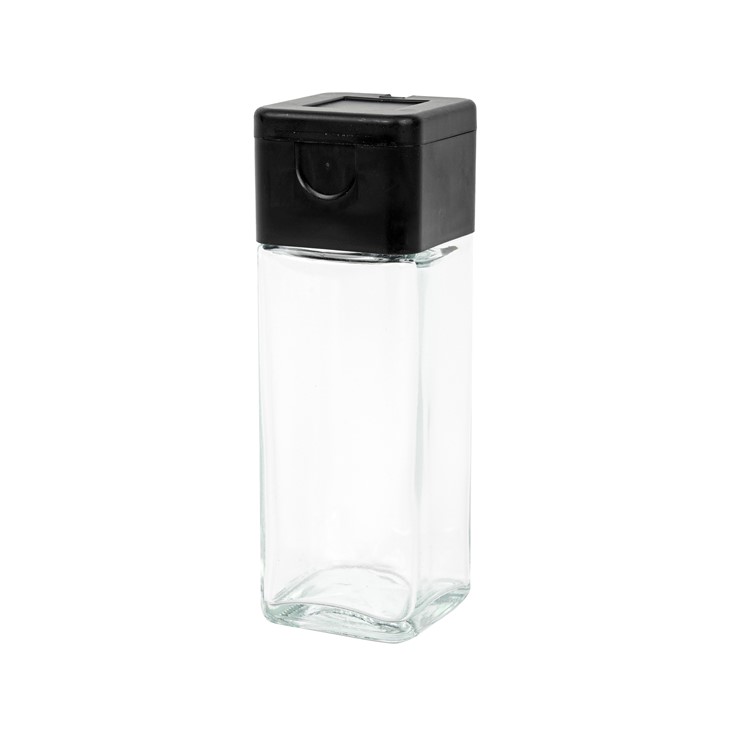
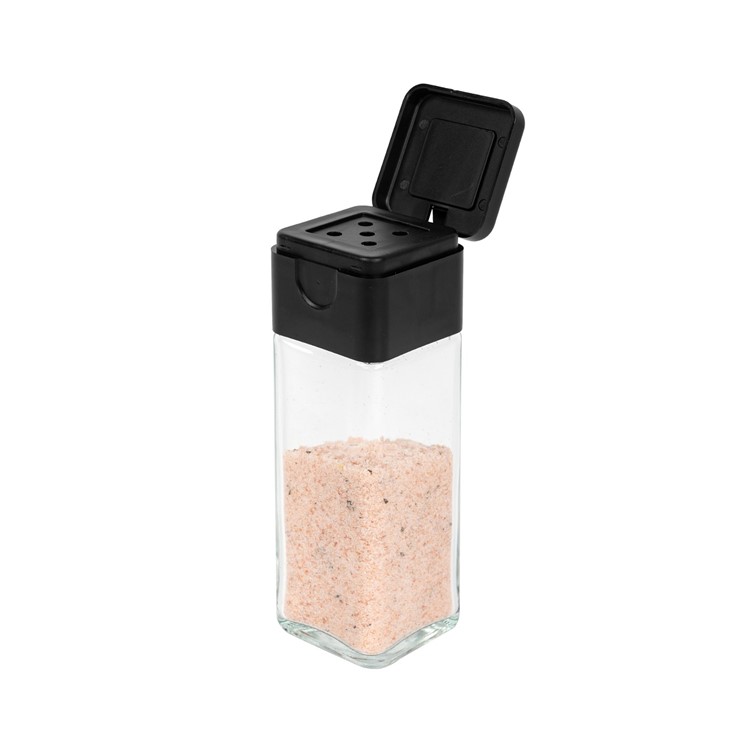
Square Glass Spice Jar with PP Flip Top Shaker Lid is used for packing dry spices, herbs, salt, pepper, and blended seasonings in both retail packaging and food service supply chains. The glass forming process is controlled to ensure uniform clarity and strength, which helps keep filling lines stable and reduces variation between production batches. The PP flip-top lid is assembled with a five-hole shaker insert to support controlled dispensing, while the snap-fit structure is designed to maintain a consistent closing force during repeated use and transport.
In factory production, this type of glass spice jar is typically processed through automated forming, annealing, and inspection stages before final assembly with lids. Each batch is checked for dimensional accuracy, sealing fit between bottle neck and lid, and surface defects before packing. The square structure is also optimized for carton loading efficiency, allowing tighter arrangement during export shipping and pallet stacking.

Product Parameters
| Item | Specification |
|---|---|
| Product Name | Square Glass Spice Jar with Shaker Lid |
| Model | H57-044 |
| Material | Glass Jar + PP Flip Top Lid |
| Capacity | 80ml |
| Size | 38 × 106 mm |
| Shape | Square |
| Lid Type | Flip Top Shaker Lid |
| Hole Design | 5 Dispensing Holes |
| Application | Salt, Pepper, Herbs, Spice Powder, Seasoning Mix, Chili Powder |
| Logo | OEM Available |
| Lid Color | Custom Available |
| OEM & ODM | Supported |
Quality Control

Square Glass Spice Jar with PP Flip Top Shaker Lid is produced under a multi-stage inspection system that runs through the entire manufacturing cycle rather than relying on final inspection alone. Incoming glass materials are checked for batch stability and impurity control before entering the forming line, and key dimensional points are monitored during production to keep mouth finish and wall thickness within controlled tolerance. After annealing, each batch is sampled to confirm structural stability and surface condition, ensuring the glass body remains consistent for filling and labeling use.
Lid components are inspected separately during injection molding, with attention to color consistency, molding stability, and fit performance with the jar neck. During assembly, random sampling is used to verify matching accuracy between glass and lid, including closure reliability and functional stability under repeated operation. Before packaging, batches are checked for quantity accuracy and carton stacking performance to ensure they are suitable for export handling and long-distance transportation conditions.
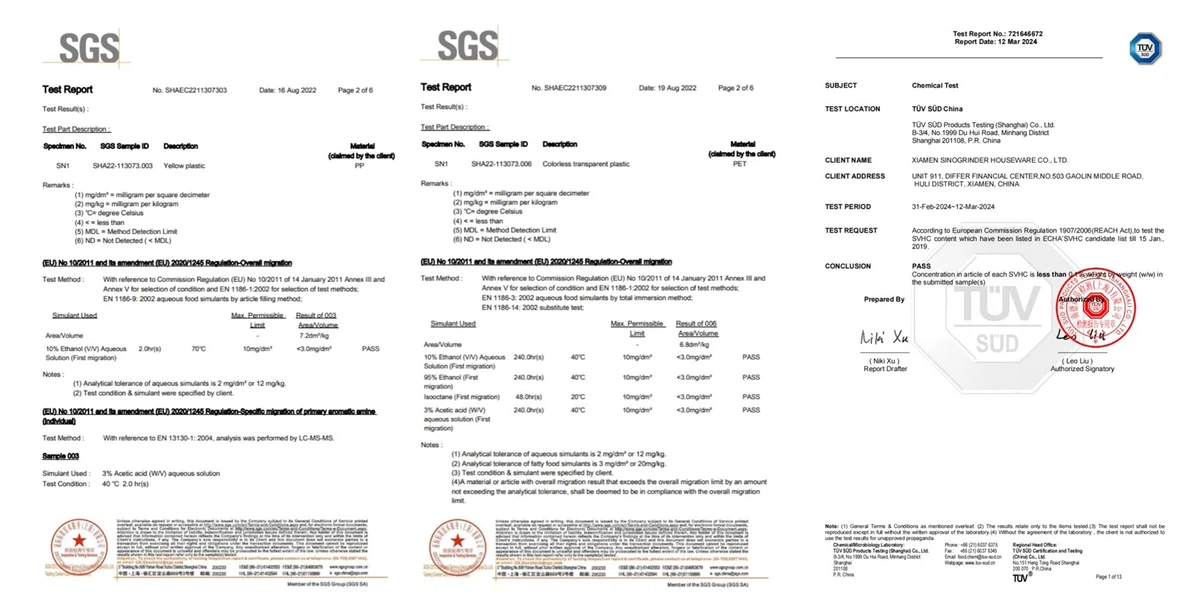
Certifications
Company Advantages
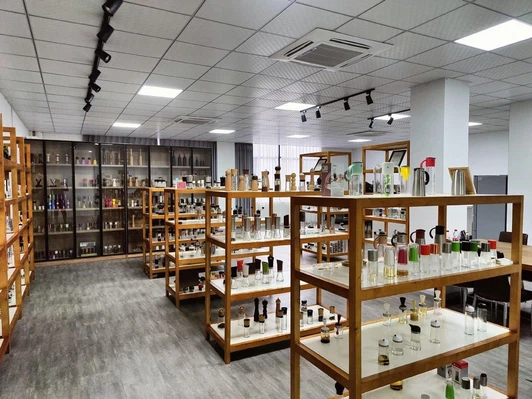
Square Glass Spice Jar with PP Flip Top Shaker Lid Manufacturer is produced through a coordinated manufacturing setup where glass forming lines and separate injection molding systems for lid components operate in parallel, allowing each process to be controlled independently rather than being merged into a single production stream.
The production system is arranged for continuous batch output, with scheduling based on fixed production cycles instead of one-off customization runs. This structure allows stable repetition of specifications across wholesale orders, especially for repeated production of the same jar model over different batches. Raw material preparation and production planning are arranged according to order volume and line capacity, which helps keep glass forming, annealing, and lid production synchronized without interrupting the flow of standard specifications.
Quality checks are integrated into multiple stages of the line, including forming, cooling, lid injection, and final assembly, rather than being concentrated at the end of production. This distributed inspection approach helps identify deviations earlier in the process, reducing batch inconsistencies before products reach packing and palletization stages.
After-sales Service
Square Glass Spice Jar with PP Flip Top Shaker Lid Wholesales supply support is handled throughout the full order cycle, from production scheduling to final shipment release, with coordination based on batch completion and inspection status.
Before shipment, any non-conforming items identified during internal inspection are isolated and rechecked against production records, and corrective handling is arranged according to batch traceability results, which may include rework or replacement depending on the defect type. Each shipment is released only after final verification of carton integrity, quantity confirmation, and packing consistency against the original production plan.
For issues reported after delivery, assessment is carried out using production batch codes combined with customer-provided photo or video evidence to determine whether the issue originated from manufacturing, handling, or transport conditions. For repeat orders, batch tracking records are maintained to ensure consistency in specifications such as glass thickness, lid fit, and packaging configuration across different production cycles.
FAQ
Q: Is the glass bottle suitable for hot filling?
A: This model is mainly designed for dry seasoning packaging. It is not recommended for high-temperature liquid filling, as thermal stress may affect structural stability.
Q:Do you have ready stock or is everything produced per order?
A: Standard specifications are usually produced in scheduled batches. Stock availability depends on production planning, but most orders are arranged through batch manufacturing.
Q:How is the glass thickness controlled during production?
A: Thickness is controlled during forming through mold calibration and furnace temperature stability. Samples are checked at intervals during production to reduce deviation within the batch.
Q:What type of packaging is used for export?
A: Export packaging is based on carton separation and stacking structure. Inner partitions are used to reduce friction between bottles during long-distance transportation.


