



Product Introductions
Oversized Pepper Mill is produced for commercial seasoning environments that require stable output and long operating cycles. In manufacturing, the stainless steel top is formed and reinforced to ensure consistent torque during repeated grinding, while the acrylic body is produced through single-piece injection molding to maintain uniform wall thickness and structural stability during use and shipping. The ceramic grinding core is installed after calibration, and each unit is manually tested to confirm smooth rotation and consistent coarseness adjustment before packaging.
With a 400mm tall structure and 560ml capacity, this model is intended for bulk-use scenarios such as restaurants and food service operations where refill frequency needs to be minimized. The overall design focuses on practical production considerations, including assembly accuracy, grinding stability, and durability under continuous use conditions.

Product Parameters
| Parameter | Description |
|---|---|
| Model | H56-004 |
| Material | Stainless steel + acrylic + ceramic |
| Size | Φ76 × 400mm |
| Capacity | 560ml |
| Grinding Type | Adjustable ceramic grinder |
| Suitable For | Salt, pepper, and dry spices |
| Usage | Commercial / Household / Wholesale |
Product Features

Oversized Pepper Mill is developed around production practicality for commercial seasoning environments where consistency and durability are required. The 400mm body structure is engineered to reduce refill frequency in real operating conditions, while the internal ceramic grinding system is selected for its wear resistance and stable particle output after long-term use. During production, each grinding set is matched and tested to ensure smooth engagement between the shaft and grinding core, reducing variation caused by mass assembly.
The acrylic barrel is formed with controlled wall thickness to maintain visibility of internal contents without affecting structural strength, and the stainless steel top component is reinforced during stamping and finishing to withstand repeated torque from manual operation. The adjustment mechanism is assembled with calibrated spacing to allow predictable coarseness control, which is verified during sampling tests before packaging. This model is intended for continuous use environments such as catering and wholesale supply where mechanical stability is more critical than decorative design.
Certifications
Quality Control
Quality control procedures of Oversized Pepper Mill Wholesales are implemented throughout the full production cycle rather than only at the final stage. Incoming stainless steel, acrylic components, and ceramic grinding cores are first checked for dimensional tolerance and surface consistency before entering production. During machining and injection processes, key dimensions such as barrel thickness, internal fitting clearance, and shaft alignment are regularly measured to ensure assembly compatibility and stable mechanical performance.
After assembly, each grinding unit undergoes functional testing to verify rotation smoothness and coarseness adjustment stability under repeated operation. Finished products are then inspected for alignment, surface finish, and structural integrity before packaging. In addition, random sampling is carried out on each batch prior to shipment to confirm consistency across production lots and to ensure that mass production maintains the same standard as approved samples.
Company Advantages
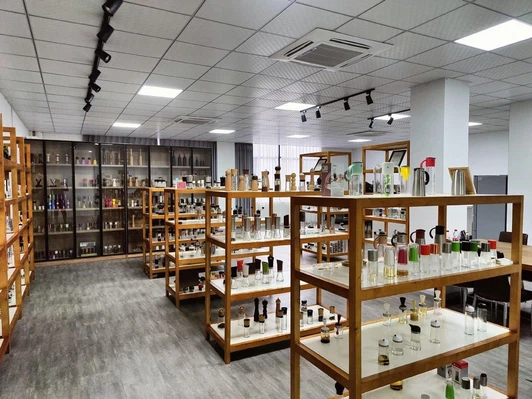
Oversized Pepper Mill Factory is supported by a production system built specifically for steady OEM/ODM supply in kitchen grinder manufacturing. From material sourcing to final assembly, stainless steel, acrylic, and ceramic components are all supplied through a fixed vendor chain to maintain consistency between batches. In production planning, this model is scheduled on flexible lines that allow both small OEM runs and large wholesale orders without changing core process standards, ensuring dimensional and functional stability across different order volumes.
At factory level, the manufacturing flow is organized around export requirements, including standardized inspection points, batch traceability, and packaging control aligned with international shipment conditions. The ceramic grinding assemblies are matched during assembly to reduce performance variation, while each production lot follows the same material specification sheet to avoid deviation in long-term supply. This structure allows the product to remain consistent even when orders scale across different markets and distribution channels.
FAQ
Q: What is your defect rate control?
A: We control quality through batch inspection and functional testing, and defective units are removed before shipment.
Q:Do you provide after-sales support?
A:Yes, we provide support for product quality issues, replacement discussion, and technical guidance based on order agreement.
Q:Can you support mixed container orders?
A: Yes, mixed product loading is supported for different models within the same shipment.
Q:How do you ensure quality consistency across repeated orders?
A: Production follows standardized processes, and key dimensions and materials remain consistent for repeat orders.


