

As a supplier of hand mill coffee grinders, I've witnessed firsthand how the design of these tools plays a pivotal role in their performance. In this blog, I'll delve into the various design aspects of hand mill coffee grinders and explain how they impact the overall grinding experience and the quality of the brewed coffee.
Burr Design
The burrs are the heart of any coffee grinder, whether it's a hand - mill or an electric one. The design of the burrs significantly affects the grind size, consistency, and the overall flavor extraction from the coffee beans.
There are two main types of burrs used in hand mill coffee grinders: conical and flat. Conical burrs are shaped like a cone, with the coffee beans being fed into the narrow end and ground as they move towards the wider end. This design allows for a more gradual grinding process. The conical shape also enables a more even distribution of pressure on the beans, resulting in a more consistent grind size. A consistent grind size is crucial for brewing coffee, as it ensures that all the coffee particles are extracted evenly. When the grind is inconsistent, some particles may be over - extracted, leading to a bitter taste, while others may be under - extracted, resulting in a weak and sour coffee.
Flat burrs, on the other hand, are flat discs that rotate against each other to grind the coffee beans. They typically offer a faster grinding speed compared to conical burrs. However, the pressure distribution on the beans is not as uniform as with conical burrs. This can sometimes lead to a slightly less consistent grind. But flat burrs are known for producing a more uniform particle shape, which can be beneficial for certain brewing methods. For example, in espresso brewing, a more uniform particle shape can help create a better - structured puck, leading to a more even extraction.
As a supplier, we offer a range of hand mill coffee grinders with different burr designs to cater to the diverse needs of coffee enthusiasts. Our Portable Manual Coffee Grinder comes with high - quality conical burrs, ensuring a consistent grind even when you're on the go.
Hopper Design
The hopper is the part of the coffee grinder where the coffee beans are stored before being fed into the burrs. The design of the hopper can have a significant impact on the grinder's performance.
A well - designed hopper should have a sufficient capacity to hold an adequate amount of coffee beans for multiple servings. This is especially important for users who like to grind coffee in batches. However, it's also important to ensure that the hopper doesn't hold too many beans, as this can lead to issues with the flow of beans into the burrs. If the hopper is overloaded, the beans may not be fed evenly, resulting in an inconsistent grind.
The shape of the hopper also matters. A hopper with a tapered shape can help guide the beans towards the burrs more efficiently. This ensures a steady and consistent flow of beans, which is essential for a uniform grind. Additionally, some hoppers are designed with a removable lid, which helps to keep the beans fresh and prevents them from spilling out during the grinding process.
Our Small Manual Coffee Grinder features a compact yet well - designed hopper. It has just the right capacity for home users who want to grind a small amount of coffee at a time, and its tapered shape ensures a smooth flow of beans into the burrs.
Adjustability Design
The ability to adjust the grind size is a crucial feature of any coffee grinder. Different brewing methods require different grind sizes. For example, espresso requires a very fine grind, while French press requires a coarse grind.
In hand mill coffee grinders, the adjustability mechanism can vary. Some grinders use a simple screw - based system, where you turn a screw to adjust the distance between the burrs. This is a relatively straightforward and cost - effective way to achieve grind size adjustment. However, it may not be as precise as some other methods.
More advanced hand mill coffee grinders use a click - based adjustment system. With this system, each click represents a specific change in the grind size. This allows for more precise and repeatable adjustments. For example, if you find that a particular grind size works best for your morning pour - over, you can easily set the grinder to that exact setting the next time you want to brew.
Our grinders are designed with adjustability in mind. Whether you're using a Non Electric Coffee Grinder for a quick cup of coffee at home or on a camping trip, you can easily adjust the grind size to suit your preferred brewing method.
Ergonomic Design
Since hand mill coffee grinders require manual operation, ergonomic design is of utmost importance. A grinder that is comfortable to hold and operate can make the grinding process much more enjoyable.
The handle design is a key aspect of ergonomics. A well - designed handle should have a comfortable grip, with a shape that fits naturally in your hand. It should also be long enough to provide sufficient leverage, making it easier to turn the burrs and grind the coffee beans. Some handles are made of materials that are non - slip, ensuring a secure hold even if your hands are a bit wet or oily.
The overall weight and balance of the grinder also play a role in ergonomics. A grinder that is too heavy can be tiring to use, especially if you're grinding a large amount of coffee. On the other hand, a grinder that is too light may not provide enough stability during operation. A well - balanced grinder will feel comfortable in your hands and will be easier to control.
Material Design
The materials used in the construction of a hand mill coffee grinder can impact its performance and durability.
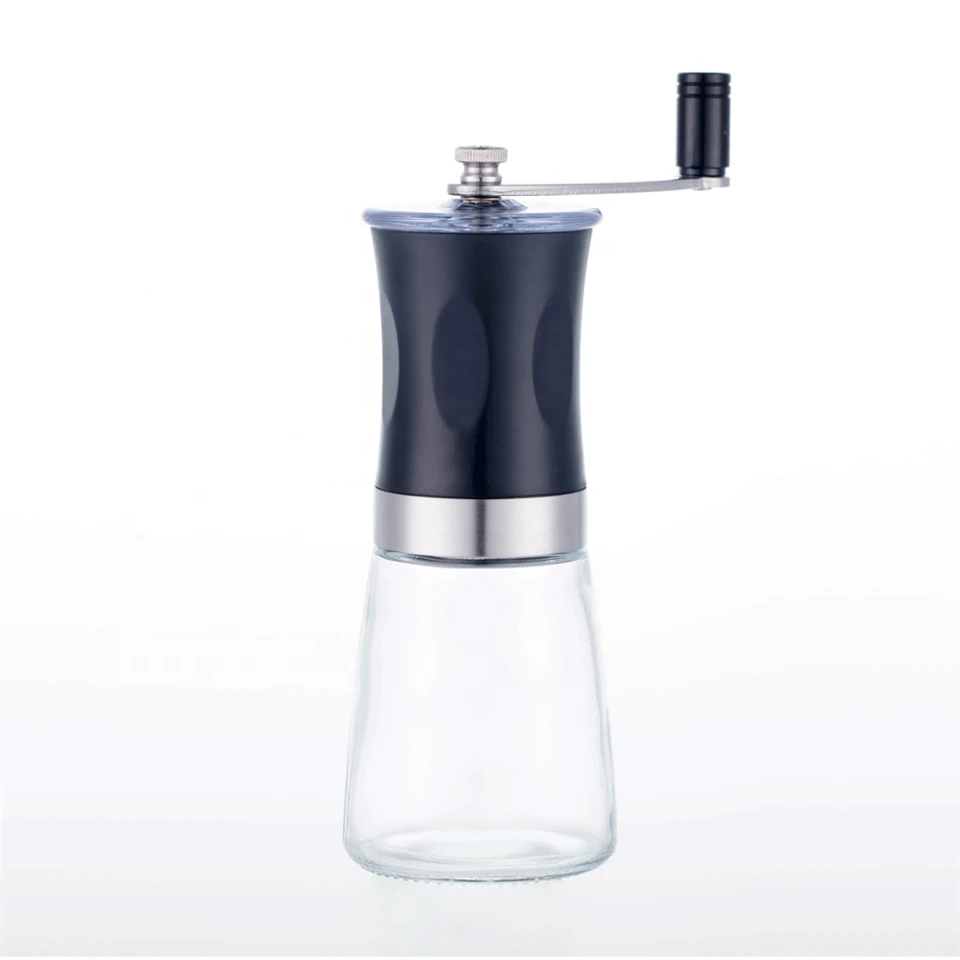

The burrs are usually made of either stainless steel or ceramic. Stainless steel burrs are known for their durability and resistance to corrosion. They can withstand a lot of wear and tear, making them a popular choice for high - quality grinders. Ceramic burrs, on the other hand, are harder and more brittle than stainless steel. They produce less heat during grinding, which can help preserve the flavor of the coffee beans. Ceramic burrs also tend to stay sharp for longer periods, resulting in a more consistent grind over time.
The body of the grinder can be made of materials such as plastic, metal, or wood. Plastic is lightweight and inexpensive, but it may not be as durable as metal or wood. Metal bodies, such as those made of aluminum or stainless steel, are strong and durable. They can withstand accidental drops and knocks. Wood bodies, on the other hand, add a touch of elegance and warmth to the grinder. They also have good insulation properties, which can help keep the coffee beans cool during grinding.
Impact on Coffee Quality
All of these design aspects ultimately impact the quality of the brewed coffee. A grinder with well - designed burrs, a proper hopper, adjustable grind size, ergonomic features, and high - quality materials will produce a more consistent and flavorful cup of coffee.
A consistent grind size ensures that the coffee is extracted evenly, which means that you'll get the full range of flavors and aromas from the coffee beans. The right grind size for your chosen brewing method is also essential for achieving the perfect balance of taste. For example, if you use a too - fine grind for a French press, the coffee will be over - extracted and bitter. If you use a too - coarse grind for espresso, the coffee will be under - extracted and weak.
Conclusion
In conclusion, the design of a hand mill coffee grinder has a profound impact on its performance and the quality of the brewed coffee. As a supplier, we understand the importance of these design elements and strive to offer high - quality hand mill coffee grinders that meet the needs of coffee lovers.
If you're interested in purchasing our hand mill coffee grinders or have any questions about our products, we'd love to hear from you. Contact us to start a procurement discussion and find the perfect grinder for your coffee - brewing needs.
References
- Illy, Andrea, and Rinantonio Illy. Espresso Coffee: The Science of Quality. Elsevier, 2005.
- Schomer, Kenneth. The Coffee Roaster's Companion: Roasting Art, Science, and Practice. Roast magazine, 2012.