

Do PET spice bottles have a good resistance to humidity?
As a supplier of PET Spice Bottles, I often get asked about the humidity resistance of our products. It's a crucial question, especially when it comes to storing spices, as humidity can significantly affect the quality and shelf - life of these flavorful ingredients.
PET, or polyethylene terephthalate, is a type of plastic that has gained widespread use in the packaging industry. It is known for its clarity, strength, and recyclability. But how does it fare when it comes to keeping humidity at bay?
The Science Behind PET and Humidity Resistance
To understand PET's humidity resistance, we need to look at its molecular structure. PET is a semi - crystalline polymer. The crystalline regions in PET act as barriers to the passage of moisture. These regions are tightly packed, making it difficult for water molecules to penetrate through the plastic.
However, PET is not completely impermeable to moisture. It has an amorphous region where the polymer chains are more loosely arranged. Water molecules can diffuse through these amorphous areas over time. The rate of moisture transmission depends on several factors, including the thickness of the PET bottle, the temperature, and the relative humidity of the surrounding environment.
Testing the Humidity Resistance of PET Spice Bottles
We conduct rigorous testing on our PET Spice Bottles to ensure they meet the highest standards of humidity resistance. In our laboratory, we simulate different humidity conditions to see how our bottles perform.
We place samples of our bottles filled with a standard amount of spice in chambers with controlled humidity levels. Over a period of weeks, we monitor the moisture content of the spice inside the bottles. We also check for any signs of clumping, which is a common indicator of moisture ingress.
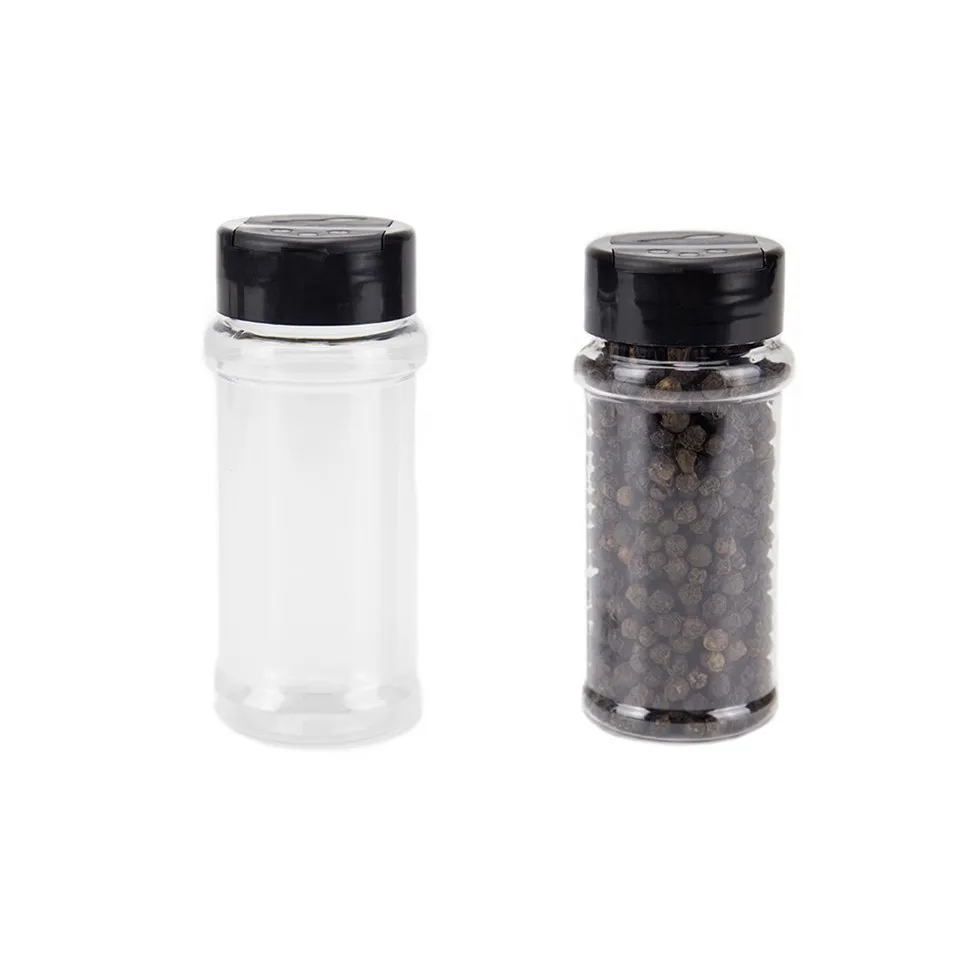

Our tests have shown that under normal storage conditions (around 40 - 60% relative humidity at room temperature), our PET spice bottles provide excellent protection against humidity. The thick walls of our bottles, combined with the natural properties of PET, create a reliable barrier that keeps moisture out and preserves the quality of the spices.
Comparing PET with Other Packaging Materials
When it comes to humidity resistance, PET competes favorably with other common packaging materials. Glass is often considered the gold standard for humidity protection because it is completely impermeable to moisture. However, glass is heavy, fragile, and more expensive to produce and transport.
Metal cans also offer good humidity resistance, but they can react with certain spices and may not be as visually appealing. PET spice bottles, on the other hand, offer a balance of good humidity protection, affordability, and lightweight design. They are also shatter - proof, which makes them a safer option for both consumers and retailers.
The Impact of Humidity on Spices
Humidity can have a detrimental effect on spices. When spices are exposed to moisture, they can clump together, lose their flavor, and even develop mold. This not only affects the quality of the spices but also their marketability.
For example, ground spices are particularly vulnerable to humidity. The small particle size increases the surface area exposed to moisture, making them more likely to clump. Whole spices are also at risk, as moisture can penetrate the outer layers and affect the internal flavor compounds.
Our PET Spice Bottles are designed to prevent these issues. By keeping humidity out, we ensure that the spices inside remain fresh, flavorful, and free from clumping for an extended period.
Design Features for Enhanced Humidity Resistance
In addition to the inherent properties of PET, our spice bottles are designed with features that further enhance their humidity resistance. We use tight - fitting caps that create a seal to prevent moisture from entering the bottle. The caps are made of high - quality materials that are also resistant to moisture.
Some of our 5.5 Oz Plastic Spice Containers and Plastic Shaker Jars are equipped with additional sealing mechanisms, such as inner liners or gaskets. These features provide an extra layer of protection against humidity, ensuring that the spices are well - preserved.
Real - World Applications
Our PET spice bottles are used by a wide range of customers, from small - scale spice producers to large - scale food manufacturers. In the retail market, our bottles are popular because they offer a clear view of the product inside, which is important for consumers who want to see the quality of the spices.
In the food service industry, our bottles are valued for their durability and ease of use. They can withstand the rigors of daily handling and storage in kitchens, where humidity levels can vary.
Conclusion
In conclusion, PET spice bottles have a good resistance to humidity. While they are not completely impermeable to moisture, their semi - crystalline structure and our design features work together to create a reliable barrier that protects spices from the harmful effects of humidity.
Compared to other packaging materials, PET offers a cost - effective and practical solution for spice storage. Our commitment to quality and rigorous testing ensures that our PET Spice Bottles meet the highest standards of humidity resistance.
If you are in the market for high - quality spice packaging that can keep your products fresh and flavorful, we invite you to contact us for a procurement discussion. We can provide you with detailed information about our products, pricing, and customization options.
References
- "Polyethylene Terephthalate (PET) Packaging: Properties and Applications" - Journal of Packaging Science and Technology
- "The Effect of Humidity on Spice Quality" - International Journal of Food Science and Technology
- "Comparison of Packaging Materials for Spice Storage" - Packaging Technology and Science