



Product Introductions
Small Individual Salt And Pepper Shakers is developed as a standardized plastic grinder model for stable batch production, with structure and material selection finalized based on long-term manufacturing feasibility. The grinder top is produced in PC to maintain dimensional accuracy during injection molding and repeated assembly, while the PET jar is selected to control wall thickness consistency and weight variation across large-volume output. This material combination allows the unit to remain uniform in appearance and fit when produced in continuous batches.
With a nominal capacity of 100 ml and a φ42 × 130 mm profile, this model is configured for efficient cavity utilization and carton packing during mass production. The size is commonly adopted for individual seasoning units and matched sets, where repeat orders require consistent specification, controlled tolerance, and minimal adjustment between production runs.

Product Parameters
| Item | Details |
|---|---|
| Model | H51-266 |
| Material | PC grinder top + PET jar |
| Size | φ42 × 130 mm |
| Capacity | 100 ml |
| Application | Salt, pepper, dry spices |
| Structure | Individual shaker / grinder |
Pricing & Cost Advantage

Pricing for Small Individual Salt And Pepper Shakers is established during production planning rather than through preset price tiers. Unit cost is calculated after confirming resin grade for the PC top and PET jar, cavity output per mold cycle, and the finalized packaging configuration. These factors are reviewed together to determine material consumption, machine time, and assembly labor for each batch.
As the full molding and assembly process is completed in-house, production schedules are arranged according to confirmed order volume. For repeat orders using the same specification, mold setup and process parameters remain unchanged, which helps maintain consistent unit cost across successive production runs.
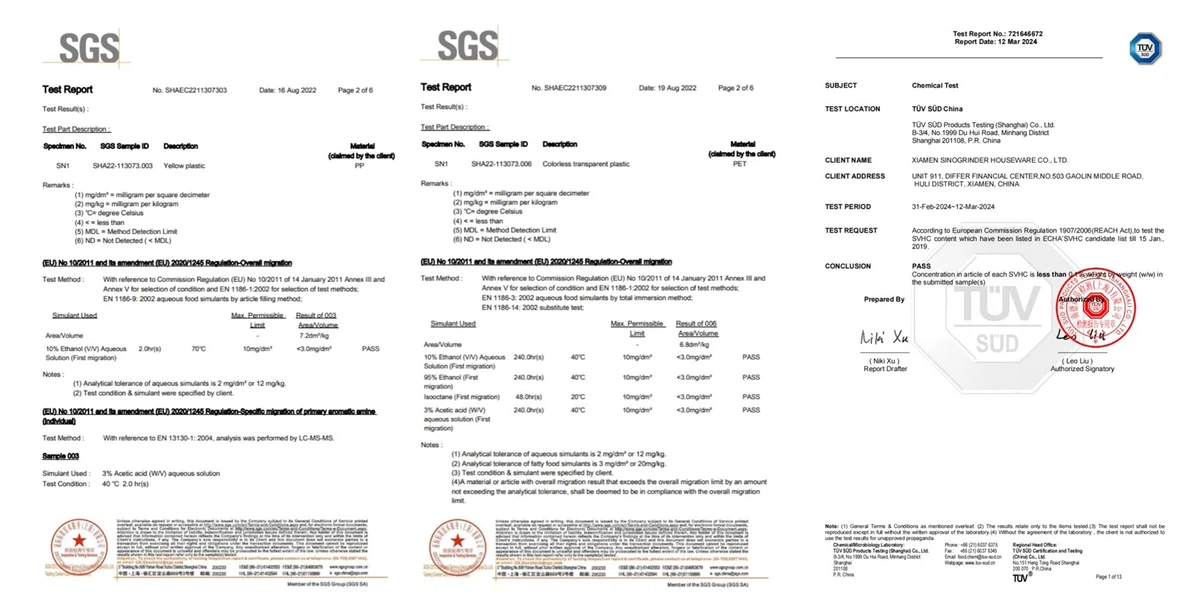
Certifications
Quality Control
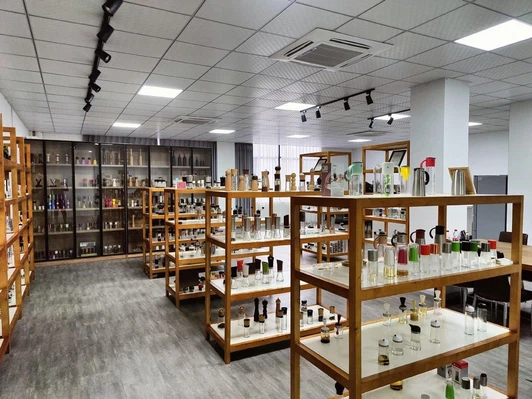
Quality control for Salt And Pepper Shakers Wholesales is integrated into each production stage to control dimensional deviation and assembly consistency rather than relying on final inspection alone. Raw materials for both PC and PET components are checked against approved specifications before molding to avoid batch variation at the source. During injection molding, critical dimensions of the grinder top and jar neck are monitored to ensure stable fit during continuous production.
After assembly, functional checks focus on rotation smoothness and component alignment to prevent tolerance stacking across large batches. Final inspections are conducted by batch sampling prior to packing, with records retained to support repeat orders using the same specification and process settings.
Packaging Options
Packaging for Salt And Pepper Shakers Factory is arranged based on unit weight, jar height, and stacking stability during transportation. In regular production, units are packed in bulk with protective separation to reduce carton volume and improve container utilization. For orders requiring additional surface protection, inner polybag packing is applied before outer carton sealing, with carton strength selected according to shipment distance and handling method.
Packaging configuration is confirmed together with order quantity and shipping plan to balance protection requirements and loading efficiency. Carton layout and packing count are fixed once confirmed, allowing the same packaging standard to be reused for repeat orders without adjustment.
FAQ
Q: What is the typical MOQ for this product?
A:MOQ is determined based on production scheduling and packaging configuration. For regular bulk packing, the MOQ is aligned with efficient mold and assembly utilization. Exact quantities are confirmed during quotation.
Q:Can the grinder top be matched with other jars?
A: Matching with other jars depends on neck dimensions and tolerance control. Technical verification is required before confirming compatibility with non-standard jars.
Q:What is the typical production lead time?
A: Lead time depends on order quantity and production schedule at the time of confirmation. For repeat orders with the same specification, lead time is usually shorter.
Q:How is unit pricing calculated for bulk orders?
A: Pricing is calculated after confirming material selection, order quantity, and packaging method. Unit cost becomes more stable as batch size increases and specifications remain unchanged.


